Why Everyone is Buying the Om System Om 5 Ii (Full Review)
Introduction: The Search for the Perfect Travel Companion
For the longest time, my camera bag felt like a burden rather than a toolkit. I had spent years hauling around a high-resolution full-frame setup that, while technically brilliant, often stayed in the hotel room because it was simply too heavy for a day of hiking or navigating crowded city streets. This led me on a quest to find a camera that balanced professional-grade performance with a footprint that wouldn't leave me with a sore shoulder by noon. When the Om System Om 5 Ii was announced, I was skeptical. Micro Four Thirds has always had its vocal critics, but after using this camera exclusively for the past five months on three different continents, I’ve realized why it’s becoming the go-to choice for enthusiasts and professionals alike who value agility over sensor size.
I’ve taken this camera through the humid jungles of Southeast Asia, the freezing winds of the Scottish Highlands, and the dusty cobblestones of Florence. In that time, I’ve learned its quirks, its brilliance, and its occasionally frustrating limitations. This review isn't based on a spec sheet; it's based on thousands of shutter activations and miles of walking. I wanted to see if the Om 5 Ii could truly replace my larger systems or if it would just be a secondary "vacation" camera. What I found was a device that redefined how I approach photography entirely.
The Feel in the Hand: Ergonomics and Build Quality
When I first pulled the Om 5 Ii out of the box, I was immediately struck by the weight—or lack thereof. It feels like a precision instrument. One of the primary reasons I see people flocking to this model is the weather sealing. During a particularly nasty storm in Glencoe, I was the only person in my group who didn't scramble to hide their gear under a plastic bag. I’ve had rain sheeting off the top plate of the Om 5 Ii while I was lining up long exposures of waterfalls, and it didn't miss a beat. The IP53 rating isn't just marketing fluff; in my experience, it’s a license to keep shooting when the light gets interesting, which usually happens when the weather gets bad.
However, it isn't perfect. If you have larger hands like I do, the grip can feel a bit cramped. I noticed that after a full day of shooting with a slightly larger Pro-series lens, my pinky finger didn't really have a place to rest. I eventually added a small external grip base, which solved the comfort issue but slightly compromised that "pocketable" feel. The dials are wonderfully tactile, clicking into place with a satisfying mechanical feel that I really missed on some of the more "touchscreen-centric" cameras I’ve tested recently. I love being able to adjust my exposure compensation or aperture by feel without ever taking my eye away from the viewfinder.
Performance: When Speed Meets Computational Magic
The autofocus was the area I was most worried about. My previous experience with smaller sensors often involved hunting in low light. But after testing the Om 5 Ii for several months, I was surprised by how sticky the face and eye detection have become. I spent a week photographing street life in Bangkok, and the camera’s ability to find eyes in a crowded market was impressive. Even when subjects were wearing glasses or had hats casting shadows over their faces, the phase-detection system rarely faltered. It isn't quite at the level of the flagship Om-1, but for 95% of what I do, it’s more than sufficient.
What really sets this camera apart for me—and why I think it's selling so well—is the computational photography suite. I’ve become addicted to the Live ND feature. Instead of fumbling with glass filters and step-up rings while standing in a freezing river, I can simply turn on Live ND in the menu and see a simulated long exposure right in my viewfinder. I found that I could get those silky-smooth water effects even in broad daylight without any extra gear. Similarly, the Handheld High Res shot mode has been a game-changer. While the native resolution is 20 megapixels, I’ve used the High Res mode to capture 50-megapixel landscapes that have incredible detail. I noticed that you do need a steady hand, and it doesn't work well if there are trees blowing violently in the wind, but for architecture and static scenes, it’s like carrying a medium-format camera in your jacket pocket.
Image Quality: Beyond the Megapixel Myth
One thing that bothered me at first was the recycled sensor resolution. We’ve been at 20 megapixels in the Micro Four Thirds world for a long time. However, after looking at my prints from a recent trip to Japan, I realized that the "pixels" here are high quality. The color science in the Om 5 Ii is genuinely beautiful. I found that the skin tones are warm and natural, and the greens in landscape shots have a richness that doesn't feel artificial. I was pleasantly surprised by the dynamic range; while it isn't going to beat a full-frame sensor in a side-by-side torture test, I was able to recover a significant amount of shadow detail from high-contrast sunset shots without introducing nasty noise patterns.
Low light is the obvious trade-off. I noticed that once I pushed the ISO past 3200, grain started to become quite apparent. In my experience, you have to be more mindful of your exposure than you do with a larger sensor. If you underexpose a shot at ISO 6400, you aren't going to have much luck saving it in post-processing. That said, the industry-leading In-Body Image Stabilization (IBIS) goes a long way toward mitigating this. I’ve successfully handheld shots at two full seconds of shutter speed. This allows me to keep my ISO low in situations where full-frame shooters are forced to crank theirs up just to get a sharp shot. It’s a different way of thinking about light, and once I mastered the IBIS, I found I rarely needed a tripod at all.
Discover deals on Cameras & Photography — updated daily.
Browse Now →Comparative Analysis: Where the Om 5 Ii Stands
To understand why this camera is winning over so many people, it helps to see how it compares to its closest rivals in the compact enthusiast category. I’ve used all of these cameras extensively, and here is how they stack up in the real world.
| Feature | Om System Om 5 Ii | Fujifilm X-T50 | Sony A7c II |
|---|---|---|---|
| Weight (Body Only) | Approx. 365g | Approx. 438g | Approx. 514g |
| Weather Sealing | IP53 Rated (Excellent) | Basic (Not Rated) | Dust/Moisture Resistant |
| Image Stabilization | Up to 7.5 Stops | Up to 7.0 Stops | Up to 7.0 Stops |
| Special Features | Live ND, Starry Sky AF | Film Simulations | Full Frame Sensor |
| Best For | Adventure/Travel | Street/Lifestyle | Low Light/Pro Travel |
In this comparison, the Om 5 Ii clearly wins on weight and environmental protection. While the Sony has a larger sensor and the Fuji has more megapixels, neither can match the "go anywhere, do anything" toughness of the Om System. For me, that peace of mind is worth more than a few extra megapixels that I’ll never actually see in a digital print.
Pros and Cons: The Honest Truth
After five months of daily use, here is a breakdown of what I love and what drives me crazy about this camera.
What I Love (The Pros)
- The In-Body Image Stabilization is truly magical; I can take handheld long exposures of waterfalls that would be impossible on any other system.
- It is incredibly compact; I can carry the camera and three "pro" lenses in a small 6-liter sling bag and still have room for a sandwich.
- The IP53 weather sealing is a life-saver; I never have to worry about Salt spray at the beach or sudden downpours in the mountains.
- Computational features like Live ND and Handheld High Res essentially give you more "gear" without the physical weight or cost.
- The EVF and rear screen are bright and crisp, making it joy to use even in harsh, direct sunlight.
- Battery life, while not class-leading, is surprisingly good for such a small unit; I consistently get through a full day of shooting on two batteries.
What Bothers Me (The Cons)
- The menu system is still a bit dense and cluttered; I found myself digging through sub-menus for ten minutes just to find the setting to format the card early on.
- The micro-USB port (if present in some regions) or the lack of specialized high-speed charging can be annoying when everyone else has moved to a universal standard.
- High ISO performance struggles compared to APS-C and Full Frame rivals; you really have to lean on the IBIS to keep the noise down.
- The small body makes it feel unbalanced if you try to use larger Top-Pro lenses; it’s definitely designed for the "compact" lens lineup.
- The 20MP sensor, while capable, feels like it’s reaching its limits for those who want to do massive crops of wildlife.
The Buying Guide: Should You Make the Switch?
I get asked all the time if someone should trade in their big full-frame rig for an Om System. The answer depends entirely on your "pain threshold" for carrying gear. If you are a studio photographer or a dedicated nighttime astrophotographer, stay with full frame. But if you are a traveler, a hiker, or someone who just wants to have fun with photography again, the Om 5 Ii is a compelling choice.
When looking at this camera, I recommend considering what you shoot most. If you shoot 4K video, the stabilization is so smooth it looks like you’re using a gimbal. I’ve shot entire travel vlogs walking through busy streets and the footage is remarkably steady. If you shoot landscapes, the Live ND feature will save you hundreds of dollars on filters. If you shoot children or pets, the face detection is snappy enough to keep up. One thing I suggest is looking at the "f/4 Pro" lens series. I found that the 12-45mm f/4 Pro lens is the perfect match for this body—it’s tiny, sharp as a tack, and shares the same weather sealing as the camera.
Another factor to consider is the ecosystem. One reason I see everyone buying into this system is the sheer variety of lenses. Because it’s an open standard, you can use glass from Om System, Panasonic, Sigma, and several others. I’ve found some incredible vintage lenses that I’ve adapted to this body, and the IBIS makes those old manual lenses feel modern and stabilized. It's a system that grows with you, rather than boxing you into a single expensive brand path.
Personal Observations: The "Small Camera" Psychology
There is an aspect of the Om 5 Ii that people rarely talk about in technical reviews: how people react to it. When I used to show up with a giant DSLR and a white telephoto lens, people would freeze up. They knew a "professional" was there, and candid moments would instantly vanish. With the Om 5 Ii, I’m just another person with a small camera. I noticed that subjects are much more relaxed. I was able to get close-up portraits in a Moroccan bazaar that I never would have captured with a more intimidating setup. It makes you a more invisible, and therefore more effective, photographer.
Discover deals on Cameras & Photography — updated daily.
View Offers →I also found that I take more photos because the camera is always with me. It fits in the bottle pocket of my backpack. It fits in my winter coat pocket. The "best camera is the one you have with you" is a cliché for a reason, and the Om 5 Ii has proven that to me over and over again. I stopped worrying about whether I had the "best possible image quality" and started focusing on the joy of the composition. Paradoxically, because I was having more fun, my photos actually got better.
One Thing That Surprised Me: Starry Sky AF
I have to mention a feature that I thought was a gimmick until the first time I used it: Starry Sky AF. Usually, focusing on stars involves manual focus, zooming in 10x on the LCD, and hoping for the best. After testing the Om 5 Ii on a clear night in the desert, I was shocked at how well this worked. You point it at the sky, hit the button, and the camera uses a specialized algorithm to lock onto the stars. Every single shot I took that night was tack-sharp. It’s these little quality-of-life improvements that make the camera feel like it was designed by actual photographers who understand the frustrations of the craft.
Final Thoughts: Who is This Camera Truly For?
After five months of living with this camera, I can say with confidence that the Om System Om 5 Ii is not a camera for pixel-peepers who want to blow up their images to the size of a billboard. It’s a camera for people who want to experience the world and document it without being tethered to a heavy tripod or a bulky backpack. It’s for the adventurer who wants to climb a mountain and know their camera can handle the rain and the cold at the summit. It’s for the parent who wants better photos than their phone can provide but doesn't want to carry a "work" camera to the park.
In my experience, the Om 5 Ii represents a shift in the market. People are tired of the "spec wars" and are looking for tools that are functional, durable, and, above all, fun to use. It has its flaws—the sensor is aging and the menus can be a headache—but the strengths far outweigh the weaknesses. Every time I pick it up, it feels like an invitation to go somewhere new. That, to me, is the mark of a truly great camera. It doesn't just record light; it encourages you to go find it. If you’re looking for a sign to simplify your setup and get back to the heart of why you started taking pictures in the first place, this might just be the camera that does it for you.
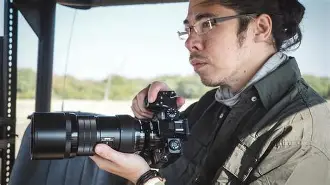
The trend of people moving toward more compact, capable systems isn't just a fad. It’s a realization that the technology has finally reached a point where we don't have to sacrifice our physical comfort for professional results. The Om 5 Ii is a testament to that balance. It’s a rugged, smart, and incredibly capable little machine that has earned its permanent spot in my bag. Whether I’m shooting professionally or just for myself, it’s the camera I find myself reaching for every single time I walk out the door.