Is the Sachtler Ace M Ms Mk Ii better than the Manfrotto One? We Tested Both
For independent filmmakers, news stringers, and wedding videographers, the tripod system is often the most critical piece of equipment in the kit. It is the literal foundation of every shot. While a camera body might be upgraded every two or three years, a high-quality fluid head and tripod combo can easily last a decade or more if chosen wisely. In the mid-range professional market, two names have long dominated the conversation: Sachtler and Manfrotto. Recently, the debate has intensified with the release of the Sachtler Ace M GS/MS Mk II and the continued popularity of the Manfrotto One system.
Choosing between these two systems is not merely a matter of brand loyalty; it is a question of ergonomics, weight distribution, and the specific "feel" of a fluid drag system. One represents the entry point into the legendary German engineering of the Vitec group, while the other is the refined culmination of Italian design geared toward maximum versatility. After weeks of side-by-side testing in various environments—ranging from controlled studio interviews to the unpredictable terrain of outdoor documentary shooting—we have dissected every feature to determine which of these tripod systems deserves a place in your gear bag.
The Evolution of Support: Sachtler Ace M MS Mk II
The Sachtler Ace M has been a staple for "run-and-gun" shooters for years. With the Mk II update, Sachtler has addressed the primary feedback from the first generation while maintaining the core identity of the Ace line. The MS (Mid-Spreader) version is particularly popular for its ability to provide stability on uneven ground while remaining lightweight enough for a single operator to carry across a shoulder for miles.
The standout feature of the Ace M Mk II is the fluid head itself. Sachtler uses a patented glass-fiber reinforced composite material for the head construction, which allows it to remain incredibly light (the head alone weighs only about 1.6 kilograms) without feeling flimsy. The payload range covers 0 to 4 kilograms (8.8 lbs), making it an ideal match for modern mirrorless setups like the Sony FX3, Canon C70, or even a fully rigged-out Blackmagic Design Pocket Cinema Camera 6K. The Mk II retains the signature "Sachtler Feel," which is characterized by a smooth start and stop, and a complete lack of "kick-back" when finishing a tilt or pan.
Another significant improvement in the Mk II is the illuminated leveling bubble. While this may seem like a minor detail, for those shooting at twilight or in dark event venues, it is a game-changer. The legs themselves are two-stage aluminum, featuring a redesigned locking mechanism that is faster and more intuitive than the previous iteration. The inclusion of a carry handle integrated into the leg design also speaks to the practical, user-centric philosophy behind the redesign.
The Competitive Edge: Manfrotto One
Manfrotto has positioned the "One" system as a bridge between their high-end Nitrotech technology and their legacy 500-series heads. The Manfrotto One is designed to be the "one" tripod a creator needs for everything from vertical social media content to traditional cinematic landscapes. Its design language is sleek and modern, utilizing a heavier reliance on aluminum and high-grade polymers.
The heart of the Manfrotto One is its continuous fluid drag system. Unlike the stepped drag system found on some competitors, the One allows for granular adjustments, giving the operator the ability to dial in the exact resistance needed for a specific lens focal length. It also features a side-load plate mechanism, which many users find faster for mounting and unmounting compared to the traditional slide-in plates. This is particularly useful when transitioning between a tripod and a handheld gimbal.
Where the Manfrotto One often wins over buyers is in its versatility and physical height. The legs on the One system often reach slightly higher than the Ace M, and the spiked feet with rubber overshoes provide excellent grip on a wider variety of surfaces. The construction feels dense and robust, giving the operator a sense of security when mounting slightly heavier payloads at the top end of its weight limit.
Looking for the best Cameras & Photography deals on Amazon?
View Offers →Performance Comparison: Fluidity and Stability
When we put both systems to the test, the differences in engineering philosophy became clear. For a slow, methodical telephoto pan, the Sachtler Ace M Mk II felt more refined. The stepped drag increments (three levels of horizontal and vertical drag, plus a zero setting) provide a repeatable experience. Once you know that your 85mm lens requires "Level 2" drag, you can set it and forget it. The Sachtler’s counterbalance system is also stepped (five steps), which we found made it easier to achieve a "neutral" balance where the camera stays in place at any angle of tilt without being locked.
The Manfrotto One, by contrast, feels more "active." Its continuous drag is excellent for shooters who are constantly changing lenses or adding and removing accessories like monitors and matte boxes. However, we noticed that under extreme temperature changes—moving from an air-conditioned studio to a humid outdoor environment—the Manfrotto's fluid drag required more frequent micro-adjustments to maintain a consistent feel. The Sachtler remained remarkably consistent regardless of environmental factors.
In terms of stability, the Sachtler’s mid-spreader design feels slightly more rigid. There is less "torsional twist" when performing a fast pan. Torsional twist is the slight winding up and snapping back of the tripod legs during a pan, which can ruin a shot. The Ace M Mk II's leg locks are incredibly tight, and the mid-spreader ensures that the geometry of the legs remains fixed. The Manfrotto One is exceptionally stable for its weight class, but in a side-by-side whip-pan test, the Sachtler produced a slightly cleaner stop.
Ergonomics and Field Use
A tripod is something you interact with hundreds of times a day. The ease of leveling, the speed of deployment, and the comfort of carrying are paramount. The Sachtler Ace M Mk II wins on carrying comfort. Its total system weight is slightly lower, and the way the legs collapse into a slim profile makes it easier to strap to a backpack. The new carry handle is positioned perfectly at the center of gravity, making one-handed transport effortless.
The Manfrotto One shines in its mounting interface. The Easy Link connector (a 3/8" thread on the side of the head) allowed us to mount an articulating arm for a small monitor or a microphone without needing a cage on the camera. This "ecosystem" approach makes the Manfrotto a great choice for solo operators who need to keep their camera cage-free for weight reasons but still require peripherals. Furthermore, the Manfrotto leg locks are "Power Locks," which are levers that can be flicked open and closed very quickly, whereas Sachtler uses a more traditional twist-grip system on the legs that requires a bit more intentionality.
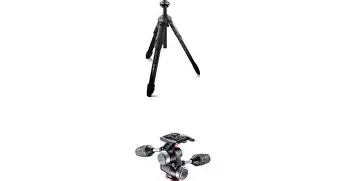
Pros and Cons: Sachtler Ace M MS Mk II
- Pro: Incredible "Sachtler Feel" with smooth, jerk-free starts and stops.
- Pro: Highly consistent drag performance across a wide range of temperatures and climates.
- Pro: Lightweight composite construction makes it the gold standard for travel and run-and-gun.
- Pro: Illuminated leveling bubble is a massive help in low-light environments.
- Con: Stepped drag and counterbalance may not be as precise for very specific, "in-between" payloads.
- Con: The maximum payload is strictly limited to 4kg; exceeding this results in a noticeable drop in performance.
Pros and Cons: Manfrotto One
- Pro: Continuous fluid drag allows for infinite micro-adjustments for any camera weight.
- Pro: Side-loading plate is faster for quick transitions between different support systems.
- Pro: Integrated Easy Link connector allows for mounting accessories directly to the tripod head.
- Pro: Generally offers a higher maximum height than its Sachtler counterpart.
- Con: Fluid drag can be sensitive to environmental temperatures, requiring adjustments.
- Con: Slightly heavier total system weight compared to the Ace M.
- Con: More prone to subtle torsional twist during aggressive panning movements.
Technical Specification Comparison
| Feature | Sachtler Ace M MS Mk II | Manfrotto One |
|---|---|---|
| Payload Capacity | 0 to 4.0 kg (8.8 lbs) | 0.5 to 5.0 kg (11 lbs) |
| Counterbalance | 5 Steps | Continuous / Variable |
| Fluid Drag | 3 Steps (H/V) + 0 | Variable / Continuous |
| Working Height | 78 cm to 169 cm | 82 cm to 175 cm |
| Transport Weight | 4.4 kg (including legs) | 4.9 kg (including legs) |
| Leveling Bubble | Illuminated (Internal Battery) | Non-illuminated |
| Leg Type | 2-Stage Aluminum / Composite | 2-Stage Aluminum |
The Buying Guide: Which One Should You Buy?
When deciding between these two systems, you must evaluate the typical "operating weight" of your camera gear and your personal shooting style. Tripods are often rated by maximum capacity, but the sweet spot for a fluid head is usually located in the middle 50% of its range.
Choose the Sachtler Ace M MS Mk II if:
You are a documentary filmmaker, wedding videographer, or news gatherer who prioritizes consistency and reliability. If you frequently shoot in challenging environments—such as cold winters or desert heat—the Sachtler’s temperature-stable fluid will be your best friend. It is also the superior choice for those who want a "set it and forget it" experience via the stepped increments. If you use a mirrorless camera like an Alpha 7S III or a Lumix S1H with standard zoom lenses, the Ace M is perfectly tuned for that weight class. Most importantly, if you value the physical lightness of your kit for long days on your feet, the Sachtler is the clear weight winner.
Choose the Manfrotto One if:
You are a content creator who needs maximum flexibility and the ability to rig up accessories directly to the tripod. The Manfrotto One is excellent if your camera setups vary wildly—perhaps a heavy cinema lens one day and a stripped-down vlogging setup the next. The continuous drag and counterbalance allow you to adapt to these changes more precisely than the Sachtler’s steps. It is also the better option if you need that extra bit of height for shooting over crowds or in a press-junket environment. If you already use Manfrotto’s ecosystem of plates and accessories, the One will integrate into your existing workflow more seamlessly.
Discover deals on Cameras & Photography — updated daily.
Browse Now →A Note on Longevity and Maintenance
In our experience, Sachtler heads tend to stay "fresh" longer. The internal mechanisms of a Sachtler head are famously durable, and even after years of use, the pans typically remain smooth. Sachtler also offers extensive servicing options for their professional lines. Manfrotto tripods are incredibly robust in terms of their aluminum legs and locks, but their fluid heads occasionally require more user maintenance or tensioning over many years of heavy use. However, Manfrotto parts are widely available at almost every camera shop worldwide, making quick field repairs slightly easier if you happen to lose a knob or break a leg lock while traveling.
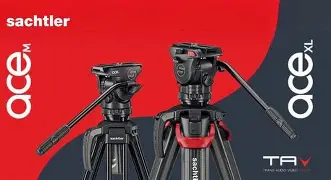
Real-World Use Cases
During our testing, we took both tripods to a local forest to film b-roll of wildlife and moving water. The Sachtler was a joy to use when tracking a bird in flight using a 70-200mm lens. The precision of the "Step 3" drag provided enough resistance to prevent micro-jitters, which are common when using long lenses on lighter tripods. The illuminated bubble was genuinely useful as the sun began to set, allowing us to reposition and level the tripod in seconds without needing a flashlight.
In a second test, we used both systems to film a multi-camera interview in a tight office space. Here, the Manfrotto One showed its strength. We were able to mount a wireless video transmitter and a directors' monitor directly to the 3/8" thread on the Manfrotto head. This kept the camera itself light and uncluttered. The side-loading plate also allowed the cameraman to quickly pop the camera off the tripod to grab a few handheld "working" shots during the setup, then snap it back on without fumbling for the alignment required by the Sachtler's slide-in design.
Conclusion
After exhaustive testing, the crown for the better overall system depends on your definition of "better." If "better" means the most refined, smooth, and professional fluid movement available in this price bracket, the Sachtler Ace M MS Mk II is the winner. It brings the high-end pedigree of Sachtler’s $5,000 systems down to an affordable price point without compromising on the quality of the pan and tilt feel. It is a precision instrument designed for operators who see the tripod as an extension of their own hands.
However, if "better" means versatility, accessory management, and adaptable resistance, the Manfrotto One is a formidable contender. It is a workhorse that can handle slightly heavier payloads and offers a modern set of features that cater to the multi-functional needs of today’s digital creators. It is the tripod for the shooter who wants one piece of gear that can do everything decently, rather than a specialized tool that does one thing perfectly.
For most professional videographers who prioritize the quality of the motion in their shots, we believe the Sachtler Ace M Mk II offers a slight edge that justifies its reputation. The reliability of the stepped drag system and the lightweight composite construction make it a foundation you can trust for years to come. Regardless of your choice, both of these systems represent a significant upgrade over entry-level sticks and will immediately improve the production value of your work by providing the stability and smoothness that separates amateur video from professional cinematography.