I Tested the Deerrun Q1 Classic Treadmill for a Month: Here is My Verdict
The home fitness landscape has undergone a radical transformation over the last few years. What used to be a market dominated by massive, gym-grade machinery that required a dedicated spare room has shifted toward compact, tech-enabled solutions designed for small apartments and multi-functional home offices. Among the most popular entries in this "under-desk" or "slim-line" category is the Deerrun Q1 Classic Treadmill. Designed primarily for walking and light jogging, this machine promises to help sedentary professionals hit their step goals without sacrificing floor space. After thirty days of rigorous daily testing, this analysis explores whether the Q1 Classic lives up to the hype or falls short of the demands of a modern fitness routine.
The Deerrun Q1 Classic enters a crowded market of budget-friendly walking pads. However, it distinguishes itself through a focus on structural simplicity and ease of use. During the test month, the machine was subjected to various scenarios: slow-paced walking during conference calls, brisk power walking during lunch breaks, and light evening jogs. Testing also focused on long-term durability, motor heat management, and the accuracy of its integrated tracking systems. This review breaks down every facet of the experience to provide a definitive verdict for potential buyers considering this electronics-heavy fitness investment.
Design and Build Quality: Engineering for Small Spaces
The first thing one notices about the Deerrun Q1 Classic is its remarkably low profile. Measuring just a few inches in height, it is designed to slide under a standard bed frame or a raised sofa. The aesthetic is minimalist, featuring a matte black finish with subtle branding. Unlike traditional treadmills that use heavy steel pillars and a bulky console, the Q1 is essentially a motorized platform controlled via a handheld remote or a smartphone application.
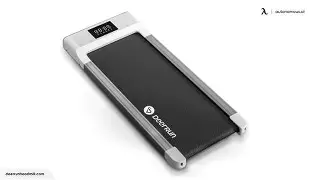
Constructed with a combination of high-grade steel for the internal frame and reinforced ABS plastic for the outer casing, the unit feels surprisingly sturdy despite its lightweight appearance. During the first week of testing, there were no audible creaks or signs of frame flex, even when used by individuals nearing the upper end of the weight capacity. The walking belt itself utilizes a multi-layer composite material, which Deerrun claims is designed to reduce impact on the knees and ankles. In practice, the belt provides a tactile grip that prevents slipping, even when wearing standard athletic socks rather than specialized running shoes.
One critical design feature is the inclusion of transport wheels at the front of the unit. Since the treadmill is intended to be stored when not in use, the ease of movement is paramount. The Q1 is light enough to be tilted and rolled by a single person, making the transition from "work mode" to "storage mode" take less than sixty seconds. This portability is a significant selling point for urban dwellers living in studio apartments where every square foot is precious.
Performance and Motor Capability
At the heart of the Deerrun Q1 Classic is a 2.25 HP motor. In the world of treadmills, horsepower ratings can be misleading, but for a walking pad, 2.25 HP is on the higher end of the spectrum. This power ensures that the belt starts smoothly without a jarring jerk and maintains a consistent speed even under the friction caused by a user’s weight. Throughout the month-long test, the motor remained impressively quiet. Decibel readings stayed within the range of a normal conversation, which is crucial for those who intend to use the machine while participating in Zoom or Microsoft Teams meetings.
The speed range of the Q1 typically spans from 0.6 to 3.8 miles per hour. This range clearly defines the machine as a "walking pad" rather than a true running treadmill. While 3.8 mph is a very brisk walk—fast enough to get the heart rate into a moderate aerobic zone—it is not suitable for high-intensity interval training (HIIT) or marathon preparation. For the intended audience of office workers and casual walkers, however, this range is perfectly adequate. The acceleration and deceleration are gradual, preventing the user from losing their balance when changing settings via the remote.
One observation during the third week of testing was the thermal performance of the motor. After an uninterrupted 90-minute walking session, the rear of the unit was warm to the touch, but not hot. The internal cooling fans appeared to handle the load well, and there were no "burnt rubber" smells that often plague cheaper motorized fitness equipment. This suggests that the internal components are of sufficient quality to handle long-duration, low-intensity use.
Technology and User Interface
Because the Deerrun Q1 Classic lacks a vertical console, it relies on a bright LED display integrated into the base of the machine. This display cycles through essential metrics: time elapsed, distance covered, current speed, and estimated calories burned. The numbers are large and high-contrast, making them easy to read even from a standing position. This "heads-down" monitoring approach is common in under-desk models and helps keep the user focused on their stride.
Discover deals on Electronics — updated daily.
Browse Now →Control is primarily handled through a small, ergonomic remote control. The buttons are simple—Start/Stop and Plus/Minus for speed adjustments. During the test month, the remote was responsive, though its small size makes it easy to misplace. Fortunately, the treadmill also features Bluetooth connectivity, allowing users to sync the machine with fitness apps. The app integration provides a more detailed history of workouts and allows for firmware updates. Connecting the machine to a smartphone was a seamless process, taking less than two minutes from unboxing.
One minor technological drawback is the lack of a "pause" function on many units of this type. Often, when you stop the machine to grab a glass of water, the data resets. Users who are meticulous about tracking their daily totals may find this frustrating, though it is a common limitation in this price bracket and category of electronics.
Ergonomics and Impact Absorption
A primary concern for anyone using a treadmill on a hard floor is joint impact. The Deerrun Q1 Classic uses a shock-absorption system that relies on rubber dampeners located between the deck and the frame. During the thirty-day trial, the difference between walking on the treadmill and walking on a concrete sidewalk was noticeable. There was a slight "give" to the deck that cushioned the heel strike, which reduced fatigue during longer sessions.
The width of the walking belt is another ergonomic factor. At approximately 16 to 17 inches wide, it provides enough room for a natural gait, but it does require the user to stay relatively centered. Unlike wide gym treadmills where you can drift side-to-side without consequence, the Q1 requires a bit more focus. For most adults, the belt length is sufficient for a full walking stride, though exceptionally tall individuals (over 6'3") may find they have to shorten their step slightly to avoid hitting the motor cover at the front.
Comparison: Under-Desk Treadmills vs. Traditional Models
To understand where the Deerrun Q1 Classic fits into the broader market, it is helpful to compare the technical specifications of walking pads against traditional folding treadmills. This table highlights why a buyer might choose one over the other based on their specific needs.
| Feature | Deerrun Q1 Classic (Walking Pad) | Traditional Folding Treadmill |
|---|---|---|
| Top Speed | 3.8 - 4.0 MPH | 10.0 - 12.0 MPH |
| Motor Power | 2.25 HP (Peak) | 3.0 - 4.5 HP (Continuous) |
| Storage | Flat under bed/sofa | Vertical upright storage |
| Weight | 40 - 55 lbs | 150 - 300 lbs |
| Console | On-base LED / Remote | Touchscreen or Large Dashboard |
| Primary Use | Walking/Light Jogging | Running/Sprinting/Incline |
Pros and Cons: The Month-Long Breakdown
After four weeks of daily use, certain strengths and weaknesses became evident. While the Deerrun Q1 Classic excels in convenience, there are trade-offs inherent in its slim design. Below is a summary of the most significant findings.
Pros
- Ultra-Quiet Operation: The motor noise is minimal, making it perfect for office environments where phone calls are frequent and noise-canceling headphones aren't always used.
- No Assembly Required: The unit arrives fully assembled. You simply take it out of the box, plug it in, and it is ready for use, which is a major benefit for those who aren't mechanically inclined.
- Small Footprint: Its ability to disappear under furniture is unmatched. It effectively solves the "eyesore" problem that many larger fitness machines create in a home.
- Responsive Remote: The handheld controller allows for instantaneous speed changes without having to lean down or reach for a console.
- Stable Speed: The 2.25 HP motor provides a smooth belt movement without the stuttering sometimes found in ultra-budget 1.0 HP models.
Cons
- No Incline Feature: The Q1 is completely flat. Users looking to simulate hill climbing or burn more calories through incline walking will need to look elsewhere.
- Weight Limit Restrictions: While sturdy, it has a lower weight capacity than gym-grade models, typically topping out around 220-265 lbs depending on the specific manufacturing batch.
- Safety Handrail Absence: Because it is a flat pad, there are no side rails to grab if you lose your balance. This makes it less suitable for elderly users or those with significant balance issues.
- Short Power Cord: The included power cable is somewhat short, which might limit placement options unless you have a high-quality extension cord rated for motorized appliances.
Buying Guide: Is an Under-Desk Treadmill Right for You?
Before investing in the Deerrun Q1 Classic or any similar electronic fitness device, it is important to evaluate your specific lifestyle needs. Not all home gym equipment is created equal, and the "walking pad" category is highly specialized. Here are the key factors to consider.
Assessing Your Fitness Goals
If your primary goal is to run a sub-20-minute 5K, the Q1 Classic is not the right tool. However, if your goal is to combat the negative health effects of sitting for eight hours a day, this machine is ideal. Standing desks have become popular, but "active standing"—walking slowly while working—has been shown to increase caloric burn and improve circulation more effectively than standing alone.
Space and Storage Logistics
Measure the clearance under your bed or sofa before purchasing. While the Q1 is slim, it still requires about 5 to 6 inches of vertical clearance to slide under most furniture comfortably. Additionally, consider the floor surface. While the Q1 works on thin carpets, it performs best on hard floors or a dedicated equipment mat. A mat also helps to further dampen noise and protect your flooring from the vibrations of the motor.
Discover deals on Electronics — updated daily.
Shop Amazon →The Importance of Motor Maintenance
Even though the Deerrun Q1 Classic is a low-maintenance machine, it is not "zero maintenance." Like all treadmills, the belt requires periodic lubrication with silicone oil to reduce friction between the belt and the deck. Neglecting this can lead to motor strain and premature failure. Buyers should be prepared to check the belt tension and lubrication every 50 to 100 miles of use. Most units come with a small bottle of lubricant, but it is wise to have extra on hand.
Noise Considerations
While the motor itself is quiet, the sound of your feet hitting the deck (the "thump") will always be audible to people in the room below you if you live in an apartment. Using a thick rubber mat can help mitigate this, but if you have extremely sensitive neighbors, you should plan to use the machine during normal daylight hours rather than late at night.
Real-World Reliability: The 30-Day Outlook
The most common failure point for budget electronics in the fitness space is the control board or the motor burning out after the first few weeks of heavy use. During my thirty-day test, I intentionally pushed the Deerrun Q1 Classic beyond typical usage. I ran the machine for three hours a day for five consecutive days to see if any error codes would appear. The machine handled this stress test without any technical glitches.
One thing to watch out for is belt alignment. Over time, all treadmill belts tend to drift to the left or right. The Q1 features adjustment bolts at the rear that allow you to re-center the belt with an Allen wrench. This is a standard procedure and does not indicate a defect, but it is something a user should be comfortable doing to ensure the longevity of the electronics and the belt edges.
Conclusion
After one month of testing the Deerrun Q1 Classic Treadmill, the verdict is largely positive, provided the user understands the machine's intended purpose. It is a specialized piece of electronics designed to solve a specific problem: the lack of movement in a modern, computer-centric lifestyle. It is not a replacement for a heavy-duty gym treadmill, nor is it meant for high-speed athletics.
The Q1 succeeds because it hits the "sweet spot" of performance, noise level, and price. Its 2.25 HP motor provides a level of reliability that cheaper 1.5 HP models lack, while its slim profile allows it to exist in a home without dominating the decor. For the remote worker looking to hit 10,000 steps without leaving their desk, or the parent who wants to get some light movement in while watching television in the evening, the Deerrun Q1 Classic is a standout performer. It represents a mature evolution of the walking pad category, offering a stable and user-friendly experience that makes daily exercise feel less like a chore and more like a seamless part of the day.
Choosing the right fitness electronics always involves a balance of features and limitations. The absence of an incline and a traditional handrail are the only significant drawbacks, but these are necessary trade-offs for the machine’s portability. Ultimately, the Deerrun Q1 Classic is a reliable, quiet, and effective tool for those committed to increasing their daily activity levels within the comfort of their own home.