Don't Buy the 1080P Full Hd Until You Read This Full Analysis
Introduction
1080P Full HD remains one of the most common display and capture specifications in consumer electronics. From budget TVs and desktop monitors to projectors and security cameras, the label "1080P Full HD" is used to describe devices with a native resolution of 1920 × 1080 pixels. That ubiquity makes it easy to assume any 1080P product is an all-purpose, good-enough choice — but the reality is more nuanced.
This analysis walks through what "1080P Full HD" actually delivers across different product classes, where it excels, where it falls short, and what buyers should prioritize based on real-world use cases: gaming, office productivity, home theater, streaming, content creation, and surveillance. The goal is to give a practical, hands-on framework so readers buy the right 1080P product for their needs rather than a headline spec.
What "1080P Full HD" Really Means
At its simplest, 1080P Full HD refers to a display or capture device that handles 1,920 horizontal pixels and 1,080 vertical pixels, with progressive scan (“P”). That resolution provides a pixel count of approximately 2.07 million, which still offers crisp visuals at smaller screen sizes (24–32 inches for monitors, 40–50 inches for TVs) and close viewing distances typical for desktop use.
However, the resolution is only one axis of performance. Panel technology, refresh rate, color reproduction, contrast, upscaling/upconvert algorithms, input lag, compression on streaming devices, and build quality often have equal or greater impact on day-to-day experience. For capture devices such as webcams and security cameras, autofocus, low-light performance, dynamic range, and bitrate matter just as much as pixel count.
Detailed Product Analysis by Use Case
Desktop Monitors and Office Use
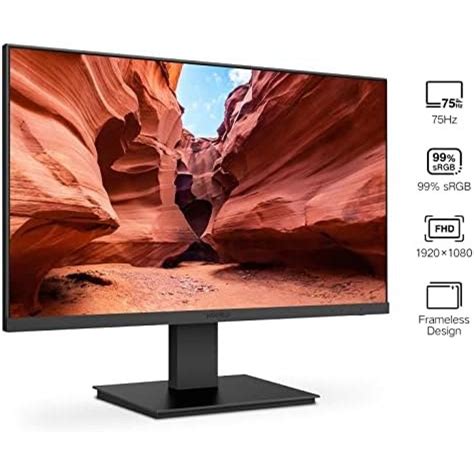
For general productivity — word processing, spreadsheets, web browsing — 1080P on a 21–27" monitor typically offers a practical balance between clarity and cost. Most users will enjoy sharp text, adequate workspace, and wide driver/hardware compatibility.
Key considerations:
- Pixel density: On a 24" monitor, 1080P yields approximately 92 PPI (pixels per inch). That is sufficient for clear text but offers less screen real estate than higher-resolution displays, which can limit visible workspace for side-by-side windows.
- Ergonomics: Adjustable stands and VESA mounting are essential in office settings; many budget 1080P monitors cut corners on stand quality.
- Color accuracy: For casual content, standard sRGB fidelity is acceptable, but creators will find 1080P IPS panels with factory calibration or wider gamut options preferable.
Gaming
1080P remains the dominant competitive gaming resolution because it strikes a sweet spot: modern GPUs can push very high frame rates at 1080P, which is vital for competitive titles where responsiveness matters. Gamers should evaluate more than resolution: refresh rate, adaptive-sync compatibility (G-Sync/FreeSync), input lag, and motion handling are crucial.
Recommendations for gamers:
- Competitive esports: prioritize 240Hz or 144Hz 1080P panels (often TN or fast IPS) to maximize frame rate and minimize input lag.
- Single-player/immersive games: a 1080P IPS panel with good color and 75–144Hz can offer a better visual experience without sacrificing responsiveness.
- Console gaming: many consoles favor 1080P at 60Hz; ensure HDR support and low input lag if using a TV as a monitor.
Home Theater and Streaming
For living room screens under ~50 inches, 1080P can still deliver an engaging movie and streaming experience, especially when paired with good upscaling engines and wide color support. The caveat: as screen size increases, pixel density decreases and the benefits of 4K become more apparent for close viewing distances.
Factors that affect perceived quality:
- Upscaling: The device’s upscaling algorithm strongly affects how lower-resolution content appears and how 4K content is downscaled to 1080P sources.
- HDR implementation: Many 1080P TVs claim HDR compatibility, but without high peak brightness or local dimming, HDR effects can be negligible.
- Sound and smart features: For many buyers, built-in streaming apps and sound quality are as important as native resolution.
Projectors
1080P projectors remain an affordable option for dedicated home theater setups. Large projected images can look impressive even at 1080P, provided the projector has good contrast, sufficient lumen output for the room, and reasonable lens quality.
Discover deals on Electronics — updated daily.
View Offers →Watchouts for projector buyers:
- Ambient light: Higher lumens are needed for non-dark rooms; contrast and black level control are equally important.
- Pixel structure: Some cheaper DLP or LCD projectors exhibit visible pixel grid or “screen-door” effects at close distances.
- Keystone and focus: Manual adjustments can reduce image fidelity; lens shift and sharp focus across the frame are premium features.
Webcams and Security Cameras
In capture devices, 1080P remains a practical and cost-effective resolution. For video conferencing, a 1080P webcam delivers clearer faces and better detail than 720P, while security cameras at 1080P provide acceptable identification capability for many home and small-business scenarios.
Important capture attributes:
- Low-light performance: Sensor size, aperture, and noise handling often matter more than resolution in dim conditions.
- Compression and bitrate: Many IP cameras compress video aggressively to save storage or bandwidth; this can negate the benefit of higher resolution.
- Field of view and lens quality: Wider FOVs cover more area but lower detail per subject. Buyers must balance coverage versus identification requirements.
Pros & Cons
Pros
- Affordable price point across TVs, monitors, and projectors compared to higher-resolution alternatives.
- Lower GPU and CPU requirements for gaming and playback, enabling higher frame rates on mid-range hardware.
- Wide compatibility with existing content, streaming services, and broadcasting standards.
- Long-established ecosystem; many accessories and mounting solutions designed for 1080P devices.
- For many day-to-day tasks, perceived sharpness is more than adequate at typical viewing distances.
Cons
- Less future-proof than 4K: as more content and consoles support higher resolutions, 1080P can feel dated on large screens.
- Limited workspace for productivity users who want multiple windows visible simultaneously without scaling.
- HDR benefits are often muted on many budget 1080P devices due to lower peak brightness and limited contrast.
- Upscaling quality varies widely; poor processors can make lower-resolution content look worse on 1080P panels than on higher-quality 4K sets with excellent scalers.
- For creators and photographers, color-critical work benefits from higher-resolution panels with wider gamut and better calibration tools.
Comparison Table: Typical 1080P Product Categories
| Product Category | Typical Size | Common Refresh Rate | Best For | Common Drawbacks | Typical Price Range* |
|---|---|---|---|---|---|
| Desktop Monitor | 21–27 inches | 60Hz–240Hz | Office work, competitive gaming, budget builds | Limited screen real estate vs 1440/4K; cheap stands | $100–$350 |
| Television | 32–50 inches | 60Hz (some 120Hz models) | Budget living rooms, secondary TVs, consoles | Poor HDR on many models; upscaling limitations | $150–$500 |
| Projector | 50–120+ inches (screen size) | 24–60Hz (depends on input) | Large-screen home theater on a budget | Brightness and contrast limitations; setup complexity | $300–$1,200 |
| Webcam / Security Camera | N/A (device form factor) | Frame rates: 30–60fps | Video calls, home surveillance | Low-light noise; compression artifacts | $30–$200 |
*Price ranges are indicative and vary by brand, features, and region.
Buying Guide: How to Choose the Right 1080P Product
Choosing a 1080P product requires balancing resolution with secondary features that determine real-world performance. Use the checklist below to match a purchase to typical scenarios.
1. Define the Primary Use Case
Identify whether the device will be used predominantly for competitive gaming, color-critical work, casual media consumption, a home theater, or surveillance. The ideal 1080P device for esports is not the same as for photo editing or a dark-room projector setup.
2. Prioritize Panel/Optics and Processing
On displays, prefer IPS or VA panels for better color and viewing angles unless the highest refresh rates are required (fast TN or fast IPS may be better there). For TVs and projectors, evaluate the upscaling engine, HDMI inputs (version matters for consoles), and local dimming or contrast-enhancement features.
3. Consider Refresh Rate and Latency for Gaming
Espots players should seek 144Hz or higher along with low input lag. Casual gamers can benefit from 75–144Hz IPS panels that balance good colors and frame-rate smoothing.
4. Look at Color and HDR Capabilities for Media and Creation
Check coverage of sRGB and wider gamuts (DCI-P3, Adobe RGB) if color accuracy matters. Beware that HDR labels on budget 1080P devices frequently indicate basic HDR10 support without the hardware (brightness, contrast) to realize noticeable HDR effects.
5. Inspect Port Selection and Connectivity
Ensure the device has the inputs needed today and in the near future: HDMI 2.0+ for consoles and 4K sources (even when downscaling to 1080P), DisplayPort for PC connections, USB-C for modern laptops, and audio outputs if external sound is planned.
Discover deals on Electronics — updated daily.
See Deals →6. Evaluate Brightness and Contrast for the Intended Environment
A bright living room demands higher nits; a dark home theater prioritizes high contrast and deep blacks. Projectors must match lumen output to screen size and ambient light.
7. Read Real-World Reviews for Upscaling, Motion Handling, and Software
Tech specs rarely tell the whole story about image processing and motion interpolation. Professional and user reviews often reveal issues like smear with fast-moving scenes, poor scaling of non-native sources, or software bloat on smart TVs.
8. For Cameras: Check Low-Light and Compression Details
Resolution is only as good as the sensor and the bitrate. Prefer cameras with larger sensors, efficient codecs, and configurable bitrate/storage options for surveillance or streaming.
9. Test or Verify Return Policy and Warranty
Because performance variances exist even within the 1080P class, confirm return windows and warranty terms. Dead pixels, backlight bleeding, or inconsistent color can be dealbreakers; a generous return policy protects buyers.
10. Balance Price and Future Needs
If the budget is tight but the buyer plans to upgrade GPUs, consoles, or viewing habits soon, consider whether stretching to a 1440P or 4K device makes more sense long-term. Conversely, if a device is for a secondary room or casual use, 1080P often gives the best value.
Real-World Examples and Scenarios
Several everyday scenarios illustrate the strengths and limits of 1080P:
- College student on a budget: A 24" 1080P IPS monitor typically offers affordable clarity, minimal power draw, and the compact size suitable for dorm desks.
- Esports competitor: A 240Hz 1080P monitor with low input lag provides an edge in reaction time, while higher-resolution displays would demand more powerful GPUs to reach the same frame rates.
- Living room second TV: A 43" 1080P smart TV can be a great secondary screen for sports and casual streaming where 4K benefits are less critical.
- Outdoor or low-light security: A 1080P camera with reliable infrared illumination and efficient compression will generally outperform higher-resolution models that sacrifice low-light sensitivity for pixel count.
- Home theater on a budget: A 1080P projector can create a large, cinematic image without the premium cost of 4K projectors — but it requires careful room control for the best contrast and black levels.
Conclusion
1080P Full HD remains a practical and cost-effective resolution across many product categories. Its strengths include affordability, lower hardware demands, and wide availability. However, buyers should not treat "1080P" as a single quality guarantee. The true difference in experience comes from panel type, processing, refresh rate, input lag, color handling, and real-world build quality.
Before purchasing any 1080P device, the informed buyer must define the primary use, inspect secondary features that influence day-to-day performance, and consult real-world reviews focused on motion handling, upscaling, low-light behavior (for cameras), and ergonomics. When these dimensions are considered together, 1080P can represent excellent value — but skipping that analysis risks buying a product that underdelivers for the buyer’s specific needs.